

AMC People �� Seung-Jung Park, director of the Asan Heart Institute
AMC People �� Seung-Jung Park, director of the Asan Heart Institute
�쏮edical doctors should always be vigilant about maintaining professionalism��
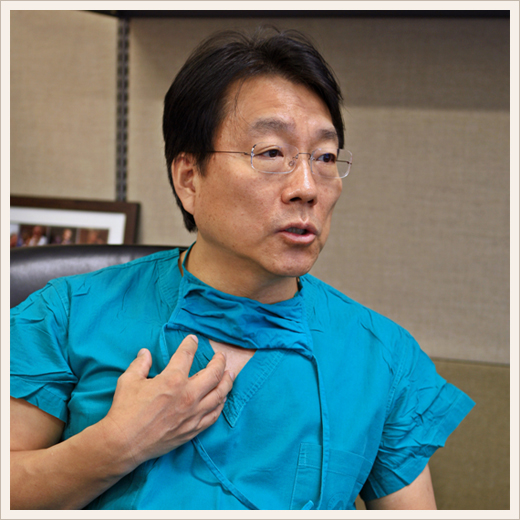
Dr. Seung-Jung Park, director of the Asan Heart Institute, has received the Best Scientist in Korea Award.
He also received the Asan Medical Award in April and the Yu Il-Han Award in January. As evidenced by these
honors, Dr. Park has been widely recognized as a medical scientist with outstanding research accomplishments
in cardiovascular disease. An interview with Dr. Park appears below.
Q. You have had a steady stream of good news this year. After receiving the Asan Medical Award,
you were honored with the Best Scientist in Korea Award.
A : It was a great honor to receive the Best Scientist in Korea Award, the most prestigious honor in the field of
science and technology in Korea. As a clinician, I feel especially grateful to be recognized as a scientist. I would
like to share this honor with so many others--AMC, the institution that has provided me with a fertile working
environment over the past 20 years; the staff of the Asan Heart Institute; the family at the Cardiovascular Research
Foundation; and especially the staff and team members of the coordination team in the Department of Cardiology,
who have tacitly followed me even when things got tough. I believe that if I didn�셳 have them, I could not be where
I am today.
Q. Organizers said that you are a world-renowned professor in the field of interventional procedures for treating
myocardial infarction and angina pectoris. Also, you are only Korean who has had four publications in the
New England Journal of Medicine (NEJM), something only ten people in the world have achieved.
With so many remarkable records and accomplishments, you were ultimately selected as an awardee.
What is the significance of these accomplishments?
A : Over the past 20 years, the technology for the treatment of coronary artery disease has made great strides
worldwide. The most important one was the introduction of balloon angioplasty for the treatment of coronary
artery disease, and another is the technique of using stents. As stent technology has come into widespread use,
it has taken root as an effective non-surgical treatment for many patients requiring surgery. In the case of left main
coronary artery disease, for which surgery is usually considered the best alternative for treatment, the therapeutic
efficacy and reliability of the stent have been particularly well demonstrated. I believe this view is widely accepted.
Q. What is your next goal as a medical scientist?
A : I have been interested the larger issue of treatment standards for coronary artery disease. So, I have been
studying new treatment guidelines. Therefore, my next research goal would be to provide standards for treatment
using stent technology, utilizing the functional index of coronary flow called the Fractional Flow Reserve (FFR).
I will also strive to further develop the technical aspects of treatment using stent technology, in order to maximize
therapeutic efficacy. Along with expanding treatment guidelines, I plan to extend the scope of my research to
topics like antiplatelet drug treatment therapy and the efficacy of stent valve replacement for patients with
aortostenosis.