

AMC placed Grade 1 in coronary artery bypass grafting
AMC was placed in the first-grade category in the adequacy evaluation of coronary artery bypass grafting (CABG), recently published by the Health Insurance Review and Assessment Service (HIRA).
Ischemic heart disease is caused by a reduced or stopped blood supply to the coronary arteries and includes acute myocardial infarction and angina. CABG is performed to replace the vessels of the narrowed coronary arteries according to severity and patient status.
The HIRA conducted the adequacy evaluation of CABG in 80 hospitals that performed CABG for 3,505 patients admitted with ischemic heart disease from October 2015 to September 2016. As a result, AMC was praised for every item, including the number of CABGs, the percentage of internal thoracic arteries usage during surgery, the aspirin prescription rate at discharge, the reoperation rate because of postoperative hemorrhage or hematoma, the mortality rate within 30 days after surgery, and the length of hospital stay after surgery.
The HIRA conducts adequacy evaluations on a regular basis and publishes the results to help patients receive safe and high-quality healthcare services. AMC has maintained Grade 1 in every item published by the HIRA, including prophylactic antibiotics, colon cancer, stomach cancer, and COPD.
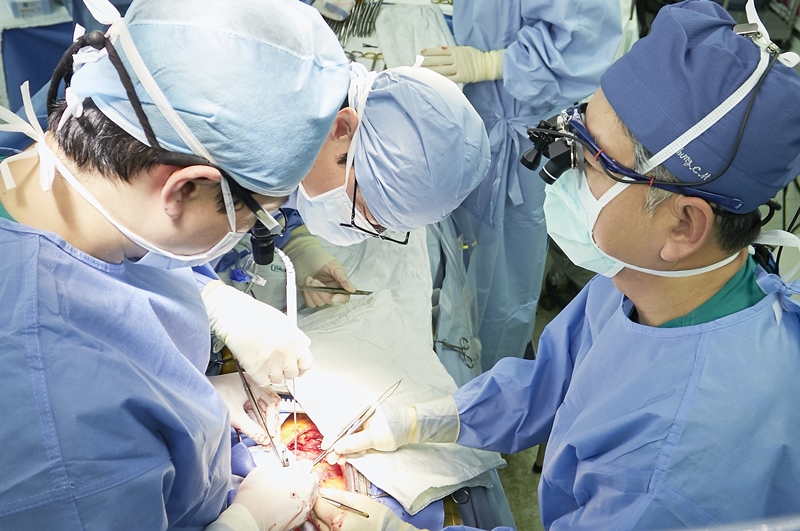
AMC was placed in the first-grade category in the adequacy evaluation of CABG, recently published by the HIRA. The photo shows Chung Cheol-hyun of the department of thoracic and cardiovascular surgery (first from right) performing CABG.